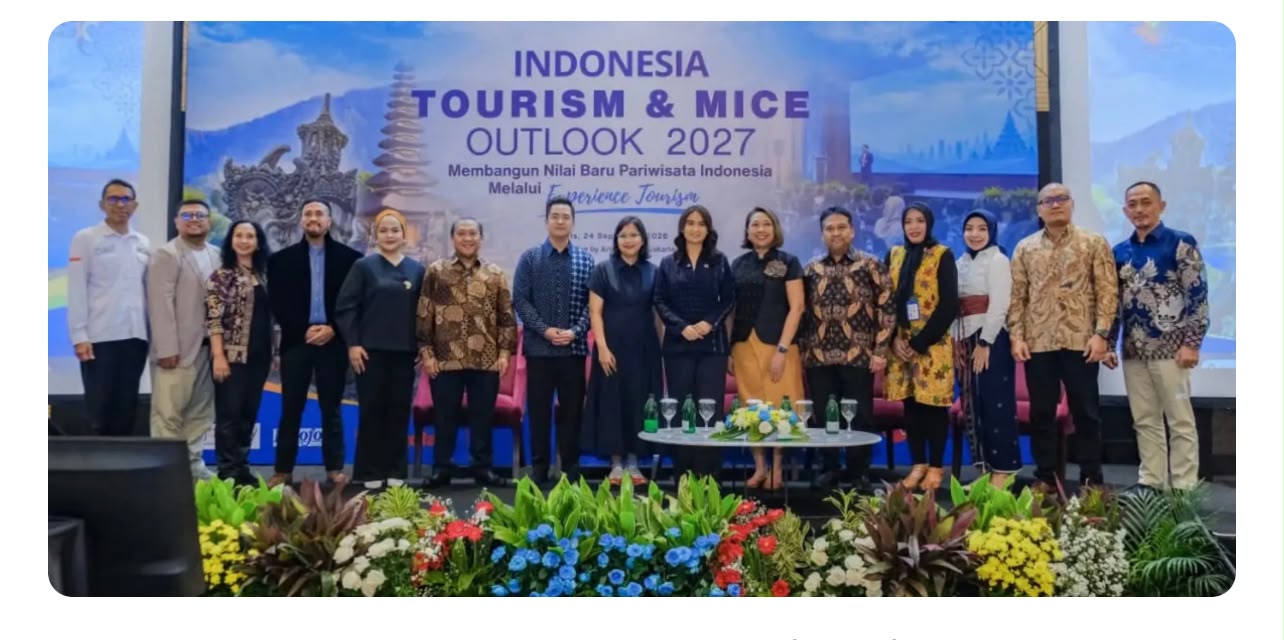
JAKARTA — The Indonesian Government is encouraging the Meetings, Incentives, Conventions and Exhibitions (MICE) sector to become one of the key drivers of tourism-led economic growth. MICE is seen as having the potential to increase length of stay and visitor spending, while generating wider economic benefits for destinations and local communities.
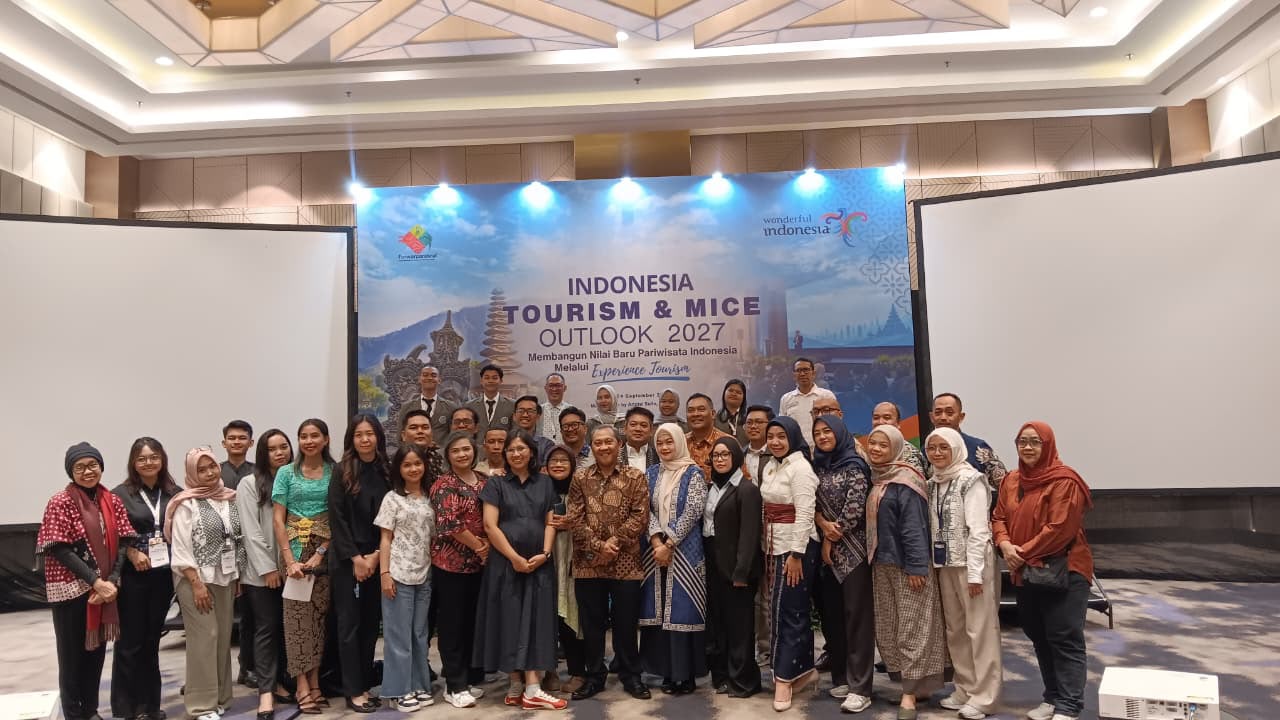
Vice Minister of Tourism Ni Luh Puspa made the statement during the Indonesia Tourism & MICE Outlook (ITMO) 2027, organised by the Forum of Tourism and Creative Economy Journalists (Forwaparekraf) at Mangkuluhur ARTOTEL Suites, Jakarta, on Thursday (24 September 2026).
According to Ni Luh, Indonesia’s tourism performance continues to show positive development. In 2025, Indonesia recorded 15.39 million international tourist arrivals. During the first half of 2026, international tourist arrivals reached 7.45 million, representing growth of 5.71 per cent compared with the same period a year earlier.
However, tourism growth should not be measured solely by visitor numbers. The Government is also focusing on increasing length of stay, visitor expenditure, quality of experience and the economic benefits generated for local communities.
“One segment with significant potential for further development is MICE,” said Ni Luh. The development of MICE is also increasingly connected with the growing bleisure trend, which combines business travel with leisure. Delegates attending conferences, meetings, incentive programmes and exhibitions are increasingly interested in extending their stays to experience local cuisine, culture, wellness, shopping and tourism attractions.
“Destination is not merely a location, and venue is not merely a space. The MICE industry needs to move from selling destinations towards creating destination experiences, and from selling venues towards designing the participant journey.”
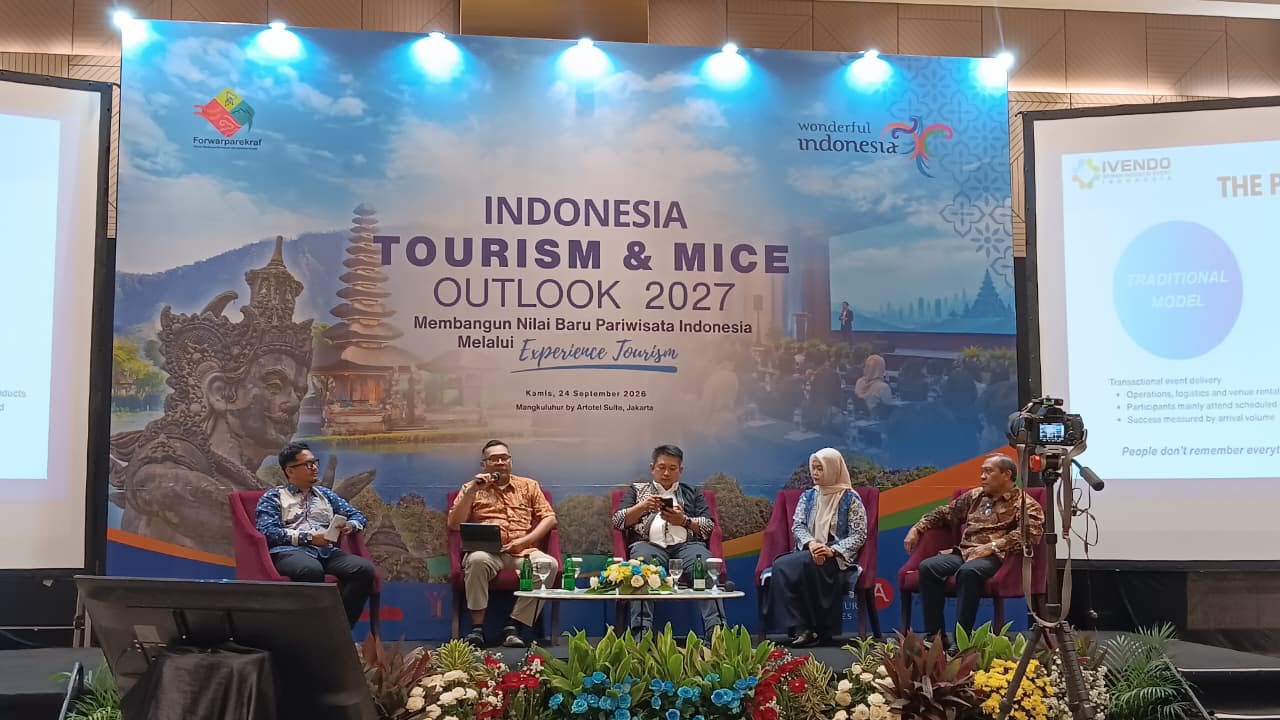
Ketut Jaman: MICE Is No Longer Simply About Selling Venues
A similar perspective was presented by Dr Ketut Jaman, Chairman of the Bali Convention & Exhibition Bureau (BaliCEB), at the same forum.
In his presentation, “Beyond Venue: Turning Indonesian Destinations into High-Value MICE Experiences”, Ketut Jaman highlighted the need to change the way Indonesia markets its MICE destinations.
He noted that companies, international associations and event organisers do not simply select a venue when choosing a destination for a business event. They are also choosing the destination and the experience that delegates will have during their stay.
“Destination is not merely a location, and venue is not merely a space,” said Ketut Jaman in his presentation.
Therefore, the competitiveness of a MICE destination cannot be determined solely by its venues, hotels, accessibility, connectivity, infrastructure, services and costs. Destinations must also be able to create distinctive and compelling experiences.
From Selling Venues to Designing the Participant Journey
Ketut Jaman said the MICE industry needs to move from selling destinations towards creating destination experiences. Likewise, selling venues should evolve into designing the participant journey.
An itinerary should no longer simply be a list of activities. Each element should be designed as part of a relevant and meaningful experience for delegates.
He also argued that MICE success should not be measured solely by visitor numbers. The industry needs to consider the value generated by each participant.
“Event is not only an agenda. Venue is not only a space. Destination is not only a location. Experience is not only an add-on.”
Transforming Local Assets into MICE Products
Indonesia has a wide range of assets that can be developed into MICE experiences, including nature, culture, heritage, gastronomy, art, design, crafts, fashion, music and local communities.
However, these assets need to be transformed into products that are ready to be brought to market. Ketut Jaman proposes a process of moving from asset to story, experience, product, market and ultimately value.
This approach also creates greater opportunities for the creative industries to become an integral part of MICE products.
Local culture, for example, should not simply be presented as a performance. Delegates can be invited to understand the stories and meanings behind traditions, as well as the communities that preserve them.
In this way, culture can evolve from a performance into a living experience. The same approach can be applied to gastronomy, nature, heritage, crafts and the arts.
DMCs as Experience Orchestrators
Ketut Jaman also highlighted the important role of Destination Management Companies (DMCs) in creating MICE experiences.
DMCs connect destinations with corporate clients, local suppliers and international buyers. Their role therefore goes beyond preparing itineraries. They can integrate different destination components into a cohesive participant experience.
This positions the DMC as an experience orchestrator, capable of transforming local potential into products with clear market fit, value propositions, pricing, service standards, operational readiness and distribution channels.
Destinations as Part of the Event
According to Ketut Jaman, the destination should become part of the architecture of the event.
Local cuisine can be incorporated into networking programmes. Heritage can form part of social programmes. Local artisans can contribute to participant engagement, while local communities can become part of experiential programmes.
Through this approach, the destination is no longer simply the location where an event takes place. It becomes part of the event’s identity and value proposition.
Measuring the Economic Value of MICE
MICE performance, Ketut Jaman said, should be measured beyond participant numbers. Relevant indicators include length of stay, participant expenditure, where that expenditure takes place, the number of local suppliers involved, the use of local products, participant engagement, satisfaction, potential repeat visits and the ability of participants to become advocates for the destination.
Through this approach, MICE can be directed towards generating economic value per visitor, rather than simply increasing visitor numbers.
BaliCEB Calls for a Collaborative MICE Ecosystem
Developing experience-led MICE requires collaboration across sectors.
Government has roles as an enabler, facilitator, regulator, connector and destination marketer. At the same time, convention bureaux, hotels, DMCs, PCOs, PEOs, venues, transport providers, attractions, creative industries, local communities, and corporate and association buyers need to be connected within a single destination ecosystem.
Within this ecosystem, BaliCEB can serve as a destination connector and business event ecosystem facilitator, bringing together relevant stakeholders.
The objective is not simply to win events, but to ensure that the destination becomes part of the value proposition of every event held in Bali and Indonesia.
Six Steps Towards an Experience-Led MICE Destination
Ketut Jaman proposes six stages for developing experience-led MICE destinations: identify, interpret, design, productise, distribute and measure.
Destination assets should first be identified and translated into stories. They can then be designed into participant journeys and developed into products with clear programmes, capacities, pricing, service standards and operational readiness.
The products can then be distributed through industry networks and international markets. The final stage is to measure experience value, business value and destination value.
Through this approach, Indonesia can move towards becoming an experience-led MICE destination. Indonesia’s proposition to international markets should go beyond the message “We have a venue”. Instead, it should offer a combination of venues, ecosystems, stories, culture, communities and experiences that create value for both participants and event organisers.
MICE as a Driver of Destination Economic Value
This approach positions MICE as part of a broader tourism value chain. The challenge for Indonesia’s MICE industry is not simply to attract more events, but to ensure that every event creates greater value for the destination.
Ketut Jaman summarises the value chain as: Destination → Experience → MICE Product → Business Value → Economic Value.
Through collaboration among government, convention bureaux, the MICE industry, tourism stakeholders, the creative economy and local communities, events can evolve beyond business agendas into experiences that encourage participants to visit, stay longer, engage, remember and return to Indonesia.
Technology to Enhance Visitor Experiences
Alongside destination and product development, the Government is also highlighting the importance of technology as Indonesia enters the era of Tourism 5.0.
Technology, including artificial intelligence, can help deliver more personalised travel services. One example is MaiA on Indonesia.travel, which helps visitors plan journeys according to their individual needs.
However, digital transformation needs to be supported by destination readiness, connectivity, human resources and collaboration among stakeholders.
For Bali, strengthening this ecosystem presents an opportunity to reinforce its position as an international business events destination. Bali’s competitive strengths extend beyond venues and facilities to its ability to combine business events with culture, nature, wellness, gastronomy, the creative economy and authentic local experiences.
Through the Beyond Venue approach, MICE can become a platform for creating experiences, extending visitor stays, expanding the tourism value chain and increasing the value generated for destinations and local communities.
Ultimately, the success of an event should not be measured solely by the number of participants attending, but by the value it creates for participants, organisers, industry stakeholders, destinations and local communities.
(#bali.ceb (BaliCEB Media Team))