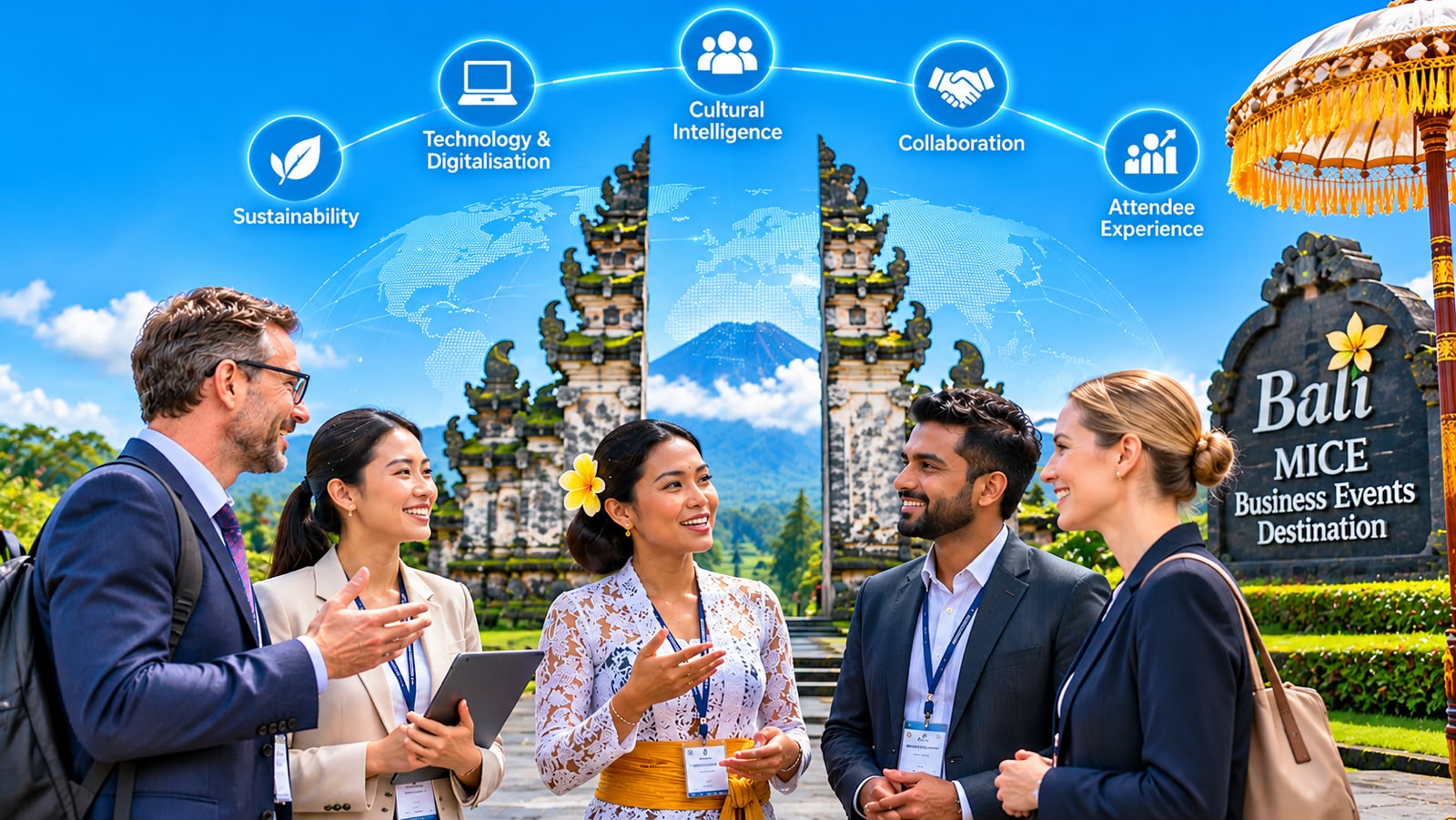
DENPASAR, BALI — The international Meetings, Incentives, Conferences and Exhibitions (MICE) industry continues to evolve. Meeting planners increasingly seek destinations and partners that offer more than professional event facilities. They expect reliable services, meaningful experiences and an understanding of international business cultures.
For Bali, this development presents both opportunities and challenges. The island has established strengths in hospitality, tourism attractions, accommodation and event infrastructure. However, to compete more effectively in the global market, Bali must also strengthen the cultural intelligence and professional capabilities of its business events workforce.
Cultural intelligence is the ability to understand, respect and respond appropriately to people from different cultural backgrounds. In international event management, it represents an important competitive advantage.
“Destination appeal alone cannot guarantee long-term competitiveness. Ultimately, Bali must move beyond being simply an attractive place to hold events. It should establish itself as a destination that understands international business cultures, respects diversity and delivers professional, reliable and culturally appropriate event experiences.”
Global Trends Shaping the MICE Industry
Despite their cultural differences, international meeting planners increasingly share several overarching priorities across global markets.
1. Sustainability and Responsible Events — Environmental responsibility is becoming an important consideration in event planning. Meeting planners increasingly consider waste management, energy efficiency, local sourcing, community engagement and the responsible use of destination resources. Bali can respond by incorporating local communities, cultural heritage and sustainable tourism practices into its business event programmes. Sustainability should be reflected in operational practices rather than treated merely as a promotional message.
2. Technology and Digitalisation — Technology is now integral to modern event management. Digital registration, event applications, hybrid meeting platforms, communication systems and data management tools improve operational efficiency and participant engagement. Bali’s business events stakeholders must ensure that venues and suppliers can meet these requirements through reliable infrastructure, appropriate technology and competent technical teams.
3. Attendee Experience and Personal Engagement — Meeting planners increasingly seek events that offer meaningful experiences beyond formal meetings and conference sessions. Networking opportunities, cultural activities, local cuisine and interactive programmes can enhance the value of an event. Bali is well placed to combine professional business events with its distinctive culture, hospitality and destination experiences.
Regional Differences Require Flexible Approaches
Although global trends create shared expectations, meeting planners do not necessarily approach events in the same way.
Some markets place greater emphasis on structured planning, punctuality and detailed documentation. Others may prioritise relationship building, personal trust and flexibility during negotiations. Communication styles also vary, ranging from direct and explicit approaches to more diplomatic and context-sensitive interactions.
These differences influence how proposals are presented, negotiations are conducted, decisions are followed up and services are delivered.
Bali’s event professionals should therefore avoid adopting a uniform approach for every international client. Instead, they should understand each client’s cultural and professional background and adapt their communication and service delivery accordingly.
Strategic Recommendations for Bali’s Business Events Industry
To strengthen its international competitiveness, Bali should consider six strategic priorities:
1. Develop Cultural Intelligence — Cultural awareness should form part of the professional development of event organisers, destination management companies, hotel personnel, venue operators and suppliers. Training should cover international business etiquette, communication styles, negotiation practices, hierarchy, religious sensitivities and hospitality expectations.
2. Strengthen International Market Knowledge — Industry stakeholders should continuously assess the characteristics and expectations of their target markets. Understanding the differences between clients from North America, Europe, Asia, Australia and the Middle East can help businesses develop more relevant proposals and services.
3. Build Trust and Long-Term Relationships — International business cooperation depends on credibility and consistency. Prompt communication, transparent pricing, clearly defined responsibilities and reliable service delivery help establish confidence among meeting planners and local partners.
4. Improve Service Adaptability — Event professionals should be prepared to customise programmes, menus, communication methods, hospitality arrangements and operational procedures to meet client requirements. Adaptability must be supported by effective coordination and consistent professional standards.
5. Strengthen Collaboration Among Local Stakeholders — Successful international events require close coordination between destination management companies, hotels, convention centres, transport operators, event production companies, government institutions and tourism attractions. A collaborative industry network enables Bali to offer integrated solutions rather than fragmented services.
6. Maintain International Standards and Respect Local Values — Professional event management requires compliance with applicable regulations, attention to safety and consistent service quality. At the same time, local cultural values and community interests should be respected and appropriately incorporated into event delivery.
Conclusion: Moving Beyond Destination Appeal
Bali has a strong foundation for developing its position as a leading international business events destination. Its natural environment, cultural heritage, hospitality, accommodation capacity and event facilities provide significant advantages.
Nevertheless, destination appeal alone cannot guarantee long-term competitiveness. International meeting planners also require partners who understand their expectations, communicate effectively and manage cultural differences professionally.
Cultural intelligence should therefore be recognised as a strategic capability across Bali’s MICE industry. Investment in professional development, international market knowledge, service adaptability and stakeholder collaboration will strengthen Bali’s reputation as a trusted global business events partner.
Ultimately, Bali must move beyond being simply an attractive place to hold events. It should establish itself as a destination that understands international business cultures, respects diversity and delivers professional, reliable and culturally appropriate event experiences.
(By Dr. Ketut Jaman – Chairman BaliCEB (BaliCEB Media Team))