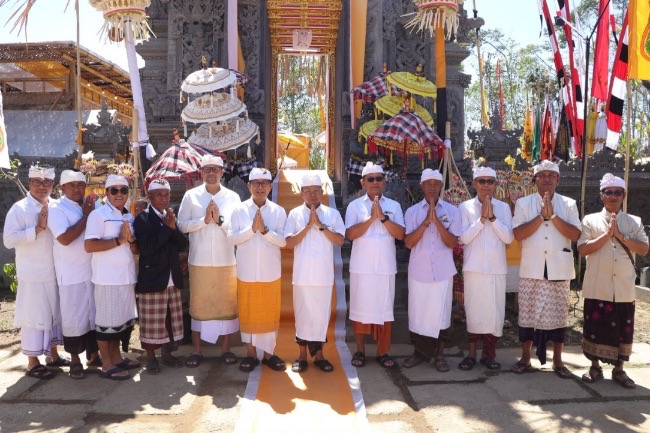
BALI, INDONESIA — Bali is reinforcing its position as a destination where culture, community and tourism development are closely connected, with the island’s traditional dress policy playing an important role in preserving cultural identity while supporting local economic activity.
Governor of Bali Wayan Koster has reaffirmed the importance of Balinese traditional dress (busana adat Bali) as part of the island’s cultural identity, character and heritage. The policy, introduced through Bali Governor Regulation No. 79 of 2018, encourages the use of traditional Balinese attire on designated occasions, including Thursdays, the full moon (Purnama), new moon (Tilem) and Bali Province Anniversary Day.
Speaking during a traditional ceremony at Pura Puncak Duwur Sari in Pancasari Village, Buleleng, Governor Koster emphasised that traditional dress should not be viewed simply as a matter of clothing or ceremonial practice. Rather, it forms part of a broader effort to strengthen cultural awareness and ensure that Balinese heritage remains a living part of everyday life.
“The use of Balinese traditional dress is part of a strategy to strengthen identity, character and cultural values, as well as the community’s appreciation of Bali’s heritage.”
Creating Authentic Cultural Experiences
For the international business events and MICE industry, Bali’s approach provides an interesting example of how living culture can become an integral part of the destination experience.
Traditional Balinese attire is increasingly seen across government institutions, hotels, restaurants, educational institutions, shopping centres and businesses, as well as among younger generations. Its presence creates opportunities for event organisers to incorporate authentic cultural elements into conferences, incentive programmes, corporate events and other business gatherings.
Cultural welcome ceremonies, traditional performances, heritage visits, culinary experiences and carefully designed cultural activities can provide delegates with a stronger connection to Bali and create memorable experiences beyond the meeting room.
Supporting Local Communities
The policy also contributes to Bali’s creative economy. According to Governor Koster, increased use of traditional attire supports a wide range of local businesses, including weavers, tailors, fashion designers, traditional clothing producers, small and medium-sized enterprises, boutiques and other related businesses.
This demonstrates how cultural preservation can generate tangible economic benefits for local communities while strengthening Bali’s creative industries.
For the MICE sector, this is particularly relevant as international clients increasingly seek programmes that demonstrate authenticity, sustainability, community engagement and positive local impact.
Culture as a Destination Asset
Governor Koster has also expressed appreciation to government institutions, educational organisations, hotels, restaurants, shopping centres, businesses and communities that support the implementation of the traditional dress policy.
He emphasises that maintaining Bali’s cultural heritage is a shared responsibility and an investment in the island’s future.
For Bali’s business events industry, this commitment adds another dimension to the destination’s competitive proposition. Bali offers not only world-class venues, hotels and event infrastructure, but also a living cultural environment that can enrich the delegate experience.
Bali Convention & Exhibition Bureau (BaliCEB) sees this combination of business infrastructure and authentic cultural experiences as an important part of Bali’s appeal to international event planners, associations, corporate clients and incentive organisers.
For MICE professionals, Bali’s traditional dress policy illustrates how culture, community and economic development can work together to create meaningful and distinctive business events experiences — allowing delegates to meet, connect and engage with the destination in a more authentic way.
((BaliCEB Media Team))