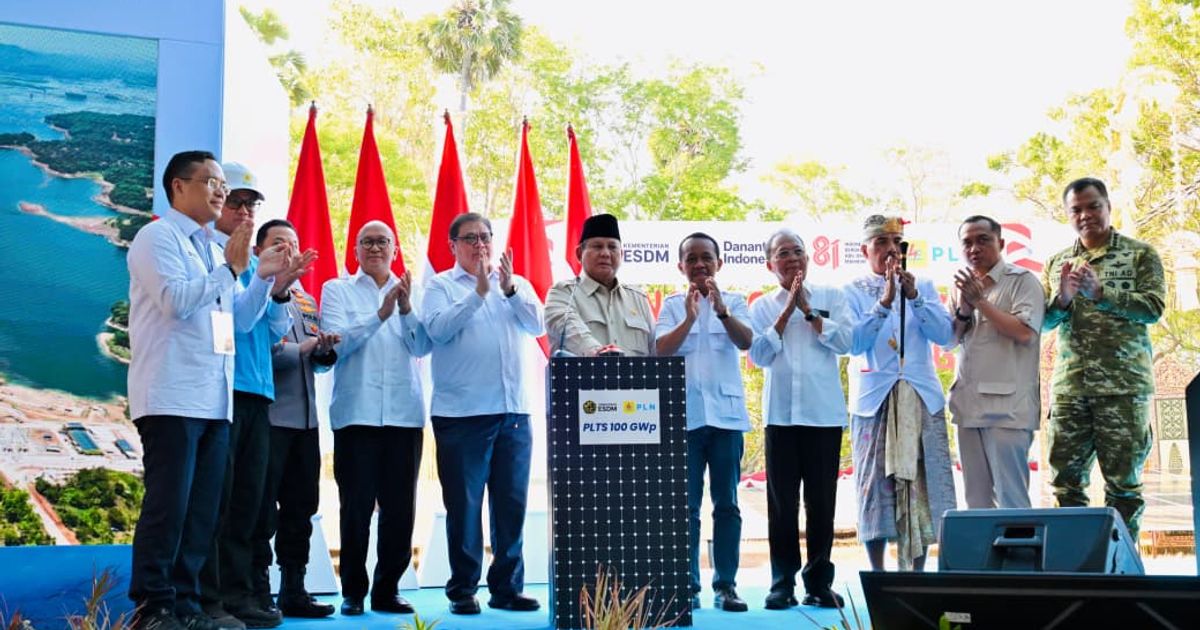
JEMBRANA, BALI — 27 August 2026 — Bali is strengthening its position as a sustainable international business-events destination following the launch of Indonesia’s ambitious 100 gigawatt-peak (GWp) solar power programme. The initiative reinforces the island’s transition towards renewable energy and supports its growing Green MICE agenda.
President Prabowo Subianto launched the national programme and attended the groundbreaking ceremony in Gilimanuk, Jembrana, on 25 August. Indonesia aims to develop 100 GWp of solar capacity within three years, beginning with 14 projects across six provinces with a combined capacity of 5.3 GWp.
For international business-event planners, the programme strengthens Bali’s sustainability proposition while complementing its established strengths in conferences, incentives, corporate meetings and exhibitions.
“The Bali Convention & Exhibition Bureau is working closely with government, industry and academic partners to strengthen sustainable business-event practices and further position Bali as a competitive international MICE destination.”
US$73 Billion Renewable-Energy Investment
Indonesia’s Minister of Energy and Mineral Resources, Bahlil Lahadalia, said the 100 GWp programme will require approximately Rp1,140 trillion, or around US$73 billion, in investment.
The programme is expected to deliver significant economic and environmental benefits, including annual energy-subsidy savings of around Rp73.9 trillion, approximately 5.52 million jobs and a potential reduction of about 140 million tonnes of carbon dioxide emissions each year.
The investment will support solar-power development, replace diesel-based generation, expand rural electrification, strengthen electricity networks and support industrial development. Private-sector participation will be encouraged through the Independent Power Producer (IPP) model.
Gilimanuk Project Highlights Bali’s Role
Bali plays an important role in Indonesia’s renewable-energy transition.
The Gilimanuk project comprises a planned 198 MWp solar power plant and a 666 MWh Battery Energy Storage System (BESS). Covering approximately 211 hectares, the project is expected to begin commercial operations in 2028.
The solar and battery-storage system will strengthen Bali’s electricity supply while reducing dependence on fuel-based generation.
For Bali’s tourism and hospitality sectors, the project represents more than an energy initiative. It supports the island’s broader transition towards a lower-emission destination at a time when sustainability is becoming an increasingly important consideration for international corporations and associations selecting destinations for business events.
Bali Strengthens Its Green MICE Agenda
The solar programme coincides with Bali’s growing Green MICE agenda, which integrates sustainability into meetings, incentives, conferences and exhibitions.
The Bali Provincial Government has identified Nusa Dua, Kuta, Ubud, Sanur and Nusa Penida as low-emission tourism areas. The strategy is built around five principles: Green Energy, Green Mobility, Green Ecosystem, Green Tourism and Green Community.
For the MICE sector, this creates opportunities to incorporate renewable energy, electric mobility, sustainable accommodation, responsible catering, waste reduction, local sourcing and community engagement into event programmes.
Dr Ketut Jaman, Chairman of BaliCEB, said the Bali Convention & Exhibition Bureau is working closely with government, industry and academic partners to strengthen sustainable business-event practices and further position Bali as a competitive international MICE destination.
Sustainability Becomes Part of the Event Experience
The development is particularly relevant to international event planners, professional conference organisers, incentive houses, associations and corporate travel managers with ESG commitments and responsible-event policies.
Bali’s Green MICE approach enables organisers to integrate sustainability into the delegate experience rather than treating it solely as an operational requirement.
Event programmes can incorporate electric or low-emission transport, locally sourced food, community-based tourism, conservation activities, cultural experiences and CSR initiatives. An incentive programme, for example, could combine luxury hospitality with environmental conservation or community projects. Conferences could incorporate sustainable transport, responsible catering and reduced-waste event production.
A New Proposition for International Business Events
The combination of Indonesia’s renewable-energy programme and Bali’s low-emission tourism strategy is creating a stronger foundation for the island’s next generation of business events.
Bali is evolving beyond its traditional proposition as a tropical meetings and incentive destination towards a model that combines international-standard infrastructure, Balinese culture, environmental responsibility and local economic participation.
For international planners seeking destinations that can support both business objectives and sustainability commitments, Bali’s emerging Green MICE strategy offers an increasingly attractive proposition.
As Indonesia progresses towards its 100 GWp solar target, Bali is positioning itself not only as a place to meet, but as a destination where international business events can contribute to a more sustainable future.
(BaliCEB Media Team)