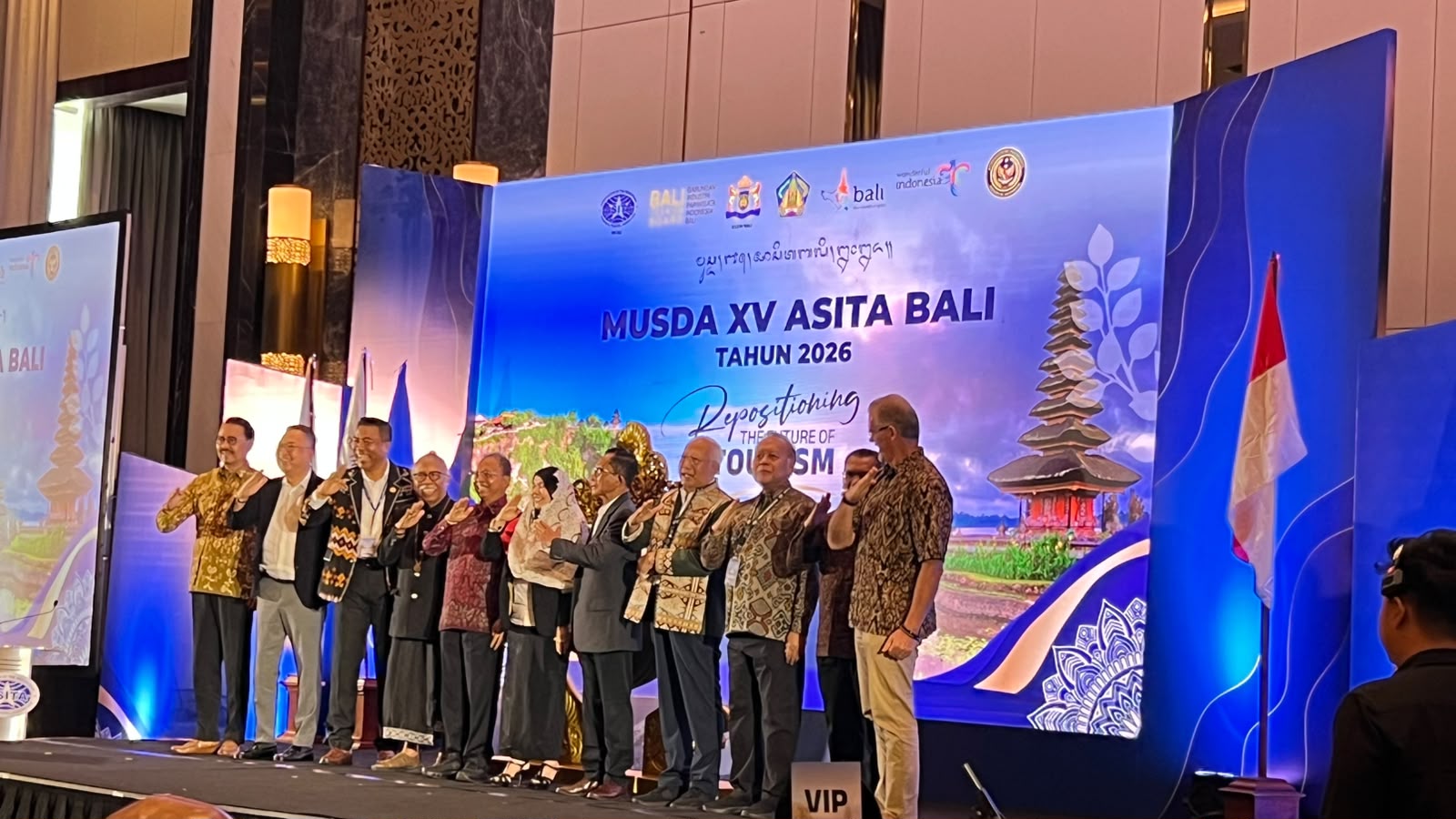
JIMBARAN, 16 October 2026 — The Governor of Bali has underscored the importance of strengthening tourism governance, preserving cultural heritage and fostering collaboration among stakeholders to ensure the long-term sustainability of Bali’s tourism industry. He emphasised that continued growth in visitor numbers must be accompanied by improvements in destination quality, environmental protection and sustainable economic benefits for local communities.
The Governor delivered these remarks during the opening address at the 15th Regional Conference of the Association of the Indonesian Tours and Travel Agencies (ASITA) Bali, held at Jimbaran Convention Centre on Friday, 16 October 2026.
Drawing on his experience serving three terms in Indonesia’s House of Representatives, particularly on Commission X and the Budget Committee, the Governor highlighted the importance of an integrated approach to tourism policymaking and management. A comprehensive framework covering the entire tourism value chain, he noted, is essential to ensuring that the industry develops in an orderly, competitive and resilient manner.
“A comprehensive framework covering the entire tourism value chain is essential to ensuring that the industry develops in an orderly, competitive and resilient manner.”

Culture: The Foundation of Bali’s Tourism Appeal
The Governor reaffirmed that culture remains the cornerstone of Bali’s tourism identity. The island’s rich traditions, spiritual values and living local wisdom distinguish Bali from other destinations and underpin its enduring international appeal.
He also highlighted the importance of safeguarding cultural continuity amid demographic changes and generational shifts. Cultural preservation, he stressed, must extend beyond maintaining traditional practices to ensuring that local communities remain active custodians and transmitters of Bali’s cultural heritage.
The long-term success of Bali’s tourism industry, he noted, depends significantly on the community’s continued commitment to preserving the cultural character that has earned the island international recognition and admiration.
Tourism Growth Delivers Significant Economic Benefits
Bali’s tourism industry has demonstrated a strong recovery and continued growth following the COVID-19 pandemic. In 2019, international visitor arrivals reached approximately 6.3 million. Recovery gained momentum in 2022, when the government began reopening access to international visitors without quarantine requirements.
In 2025, Bali recorded approximately 7.05 million international visitor arrivals and 9.3 million domestic visitor arrivals, bringing the combined total to around 16.3 million visits. By September 2026, international arrivals had reached approximately 5.2 million, with the annual total projected to potentially exceed the previous year’s figure.
According to the Governor’s presentation, Bali accounted for approximately 45.8% of Indonesia’s international visitor arrivals in 2025. With average expenditure of US$1,522.44 per international visitor, tourism-related foreign exchange earnings generated by Bali were estimated at approximately IDR 176 trillion. Tourism was also reported to contribute around 66% of Bali’s economy.
These figures reinforce the need for a tourism strategy that looks beyond visitor numbers, prioritising visitor experience, regulatory compliance, a fair business environment and the long-term sustainability of the destination.

Four Strategic Priorities for Tourism Development
The Governor outlined four key challenges requiring coordinated action across government and industry:
1. Strengthening accommodation regulation: Unlicensed tourism accommodation was identified as a source of unfair competition. The government is encouraging digital platforms to market only accommodation that meets the applicable licensing requirements. According to the Governor, approximately 5,000 new licensing applications were being processed during the 2025–2026 period. Stronger enforcement is expected to promote a fairer business environment and improve compliance with tax obligations.
2. Advancing waste management: The government is promoting the development of a waste-to-energy facility serving Denpasar and Badung, with a planned processing capacity of 1,500 tonnes per day. The project, involving a Chinese company, is targeted for completion in October 2027. It is expected to support more effective waste management and help protect Bali’s environmental quality.
3. Building clean energy resilience: Bali is pursuing a more self-reliant and environmentally responsible energy system. The proposed approach includes gas-fired power generation and support from the central government for 1,000 megawatts of solar photovoltaic capacity. These initiatives aim to strengthen energy security and reduce reliance on conventional fossil fuels.
4. Improving transport infrastructure: Traffic congestion remains a challenge affecting local mobility and the visitor experience. Planned improvements include an overpass project in Jimbaran, with an estimated budget of IDR 350 billion, alongside supporting infrastructure upgrades in Badung and other parts of Bali.
BaliCEB Champions Collaboration for Sustainable Tourism
The Governor emphasised that safeguarding Bali’s tourism future is a shared responsibility. Government authorities, travel businesses, accommodation providers, industry associations and local communities must work together to maintain destination quality and support responsible tourism development.
Cross-sector collaboration is equally important in strengthening Bali’s competitiveness as a destination for Meetings, Incentives, Conferences and Exhibitions (MICE). For the Bali Convention & Exhibition Bureau (BaliCEB), destination quality, reliable infrastructure, environmental stewardship and cultural authenticity are essential to building confidence among international event organisers and strengthening Bali’s position in the global MICE market.
Looking ahead, tourism development must deliver more than increased visitor numbers. It should generate lasting economic value, safeguard cultural heritage and improve community well-being. Through effective governance and a shared commitment to sustainable development, Bali can reinforce its reputation as a world-class destination distinguished by quality, cultural richness and long-term sustainability.
((BaliCEB Media Team))